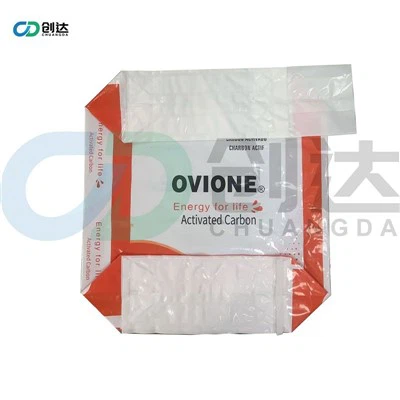
[TL;DR]FFS (Form-Fill-Seal) bag, made from 2-4 layers of co-extruded PE film 100-250 microns thick, can really cut total packaging cost by 30% or beyond compared with pre-made sacks, also handle loads in the 5-50 kg range, and typically run 60-120 bags per minute on automated lines. Chuangda Plastic Packaging, ISO 9001:2015 certified, has a 10,000 m² plant with 100+ employees, and they supply custom FFS bags for fertilizer, chemical, food, and construction material industries worldwide.
Introduction: Why Your Packaging Choice Directly Impacts Profit Margins
What Are FFS Bags and Why Are Industrial Buyers Switching?
characteristics of Chuangda FFS bags:
Material
2-4 layers co-extruded PE film, combining HDPE and LLDPE for optimal strength-to-flexibility ratio
01
Thickness range
100-250 microns - selectable based on product weight and handling conditions
02
Throughput
60-120 bags per minute on a compatible FFS filling machine - versus 30-50 bags per minute for conventional pre-made bag lines
03
Printing
Up to 8-color gravure printing on the film roll for branding or regulatory labeling
04
Moisture barrier
Water vapor transmission rate ≤2 g/(m²·24h) on FFS PE valve bag configuration
05
- The range of FFS bag types you can get from Chuangda, kind of includes open-top bags for manual and automated systems, gusseted bags which are tuned up for stacking heavy granular products like fertilizer , pillow-type bags for powders and granules, and also shaped bags with custom geometry , you know for special filling needs. Each format ends up being made for a specific filling environment , so it fits the job kind of exactly.
- MOQ:1,000 pcs for standard configurations; 10,000 pcs for FFS film rolls
Primary sectors served:
Fertilizers and agrochemicals
Cement, lime, and dry construction materials
Pet food, animal feed, flour, and dry food products
Pharmaceutical powders and industrial chemical powders
Snack foods, milk powder, nuts, seeds, and rice
FFS Bags vs. Pre-Made Woven Bags: An Objective Comparison for Industrial Buyers
There are basically two dominant formats out there for heavy-duty bulk packaging: FFS film bags , and pre-made woven PP/PE bags. People use both types pretty often for fertilizer, chemical , and food packing. But the "right" pick really depends on your filling line setup, what product you carry, the amount volume you manage, and of course the cost priorities you have in mind.
| Criteria | FFS Film Bags (Chuangda) | Pre-Made Woven PP Bags |
| Material base | 2-4 layer co-extruded PE film (HDPE/LLDPE) | PP woven fabric, 120-200 g/m² |
| Filling speed | 60-120 bags/min (automated FFS machine) | 30-50 bags/min (pre-fed to filler) |
| Packaging cost structure | Roll film eliminates pre-pouch cost; savings ≥30% vs pre-made | Higher per-unit cost; separate bag inventory required |
| Moisture resistance | Water vapor rate ≤2 g/(m²·24h) on valve configurations | Dependent on PE liner; base fabric is permeable |
| Seal integrity | In-line forming and sealing minimizes contamination risk | Sewn or heat-sealed top after filling; more exposure points |
| Load range | 5 kg to 50 kg per bag | Commonly 25 kg to 50 kg; less flexible for smaller sizes |
| Size flexibility | One machine adjusts film width for different SKUs | Each bag size requires separate pre-made inventory |
| Drop test performance | Verified per design specification | 25 kg bags: free fall 1.5 m × 3 times without damage (woven) |
| Printing quality | Up to 8-color gravure on film roll | Up to 6-color flexographic or gravure on woven |
| Anti-static option | Available on film formulation | Available as coating on woven surface |
| Best fit | High-volume automated lines, fine powders, wet/moist products, multi-SKU operations | Very heavy loads, abrasive granular products, operations without FFS machines |
How to Pick the Right FFS Bag Configuration: a step by step buyers guide
1 First, sort out your product category , like dry powder , granules , wet moister food, or a hazardous chemical. Dusty powders and those fine granule types usually do better with a pillow -style or gusseted FFS bag. Especially when you care about tight seal integrity, and you don't want micro leaks during storage. For wet or moister items (pet food, fresh feed, that kind of) you should lean toward an in-line sealing method, because it tends to reduce the contamination "gap" during operation.
2 Next, verify your filling machine type. FFS bags only work well when they match the compatible Form-Fill-Seal filling machine. Check the film feed width on your setup (most times it's roughly 300-800 mm) and confirm the film thickness window (often about 100-250 microns). Then send these numbers to Chuangda's technical team, so they can translate that into the right film specification.
3 Now define your load per bag. Be super clear about net weight per bag: under 10 kg (light) , 10-25 kg (standard) , or 25-50 kg (heavy). That category influences the film layers too (commonly 2 layers or 4 layers) and it also affects what thickness will work best for your case.
4 Also state your moisture sensitivity, plus any chemical exposure. If the product is picky about humidity , like milk powder , fertilizer, or certain chemicals, you'll want a low water vapor transmission rate. Ask for a moisture barrier spec of ≤2 g/(m²·24h). For hazardous chemicals, request an anti-static film treatment, so it behaves more safely and consistently.
5 Decide what printing is needed. If you require branding, regulatory statements, or multi language labeling, specify the color count (up to 8 colors) , your preferred print position, and which text elements must be visible. Share your artwork in PDF, PSD, or AI format. Chuangda's team will check color registration and also whether the design is production compatible, not just "looks right".
6 Request a pre-production sample. Typical sample lead time is around 5-8 working days. Samples from existing invento
Why global buyers kind of source FFS bags from Chuangda Plastic Packaging
| Credential / Capability | Verified Detail |
| ISO 9001:2015 | Quality Management System Certification - covers raw material inspection through finished product dispatch |
| ISO 14001:2015 | Environmental Management System Certification |
| ISO 45001:2018 | Occupational Health and Safety Management System Certification |
| Production equipment | Multiple three-layer film blowing machines; advanced gravure printing machines; embossing-edge inserting machines; computer high-speed bag-making lines |
| Quality control | Independent full-time QC department; 100% quality guarantee on all shipments |
| Response time | 24-hour response commitment for inquiries and after-sales technical support |
| OEM/ODM service | Custom sizes, colors, materials, printing, and formulations based on buyer specifications |
| Export markets | North America, Europe, Japan, Southeast Asia, India - with multilingual website support in 40+ languages |
Frequently Asked Questions (FAQ) - FFS Bag Sourcing from China
- If your volume warrants automated filling or you already run FFS machines, FFS film bags are the superior long-term choice, delivering ≥30% cost savings versus pre-made bags, up to 120 bags/min throughput, and tighter seal integrity.
- For non-automated operations, a staged transition - starting with custom sample trials on your existing line - enables low-risk format validation before volume commitments.ISO 9001/14001/45001 certified Chuangda Plastic Packaging operates a 10,000 m² production facility with over 10 years of PE packaging manufacturing experience. We review your specifications and provide no-obligation technical quotations for custom configurations, detailed pricing, or pre-production samples.
Q: What is the minimum order quantity for custom FFS bags from Chuangda?
A: For standard configurations , the MOQ is 1,000 pcs. If you're ordering FFS film rolls ( meant to run directly on Form-Fill-Seal machines ) , the MOQ is 10,000 pcs . Custom dimensions, colorways or even different material blends might need a quick feasibility check from production first ,so the exact MOQ can be confirmed after that.
Q: What weight loads can Chuangda FFS bags reliably handle?
A: Chuangda FFS bags are set up to manage roughly 5 kg up to 50 kg per bag. The exact film gauge ( about 100-250 microns ) and the number of co-extruded layers ( typically 2-4 ) are chosen based on what you're packing, how it will be handled, and the load requirement. When you go beyond 25 kg , a 4-layer build is usually the safer call.
Q: How long does production take after I confirm my FFS bag order?
A: Usual production time is about 10-20 working days after design confirmation, and once the deposit has been received. If you need samples for pre-order validation , sample production generally takes 5-8 working days . For time sensitive schedules, it's best to reach out to the Chuangda technical team so they can confirm the latest production window.
Q: Can FFS bags from Chuangda be used for food-grade applications such as pet food or milk powder?
A: Yes, absolutely. Chuangda FFS bags are commonly used for pet food, animal feed, milk powder, nuts, seeds, flour, and rice packing. For food-contact use , please mention your regulatory needs during the inquiry ( like EU food contact material compliance, or FDA compliance ) so the right film composition and certification paperwork can be prepared.
Q: What are the payment and shipping terms for international orders?