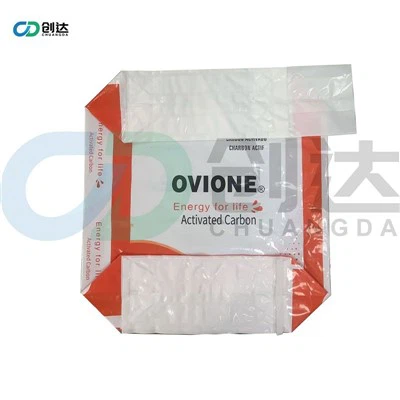
The PE bag (polyethylene bag) production process primarily includes the following key steps:
1. Raw Material Preparation
Material Procurement: First, polyethylene (PE) granules are purchased as the primary raw material. These granules may include high-density polyethylene (HDPE) or low-density polyethylene (LDPE), depending on the desired PE bag properties and application scenario.
Raw Material Proportioning: Based on the specific requirements of the PE bag (such as anti-static, rust-proof, conductive, biodegradable, etc.) and properties such as color, transparency, toughness, and tear strength, different raw material ratios are formulated, and appropriate auxiliary additives (such as masterbatch, fillers, plasticizers, lubricants, stabilizers, etc.) are added.
2. Film Blowing Process
Hot Melt Mixing: The prepared PE granules are added to a specific machine, heated to a molten state, and thoroughly mixed to ensure uniformity and consistency.
Extrusion and Stretching: The molten PE material is extruded into a continuous film through an extruder. The film's thickness and width are adjusted through a stretching process to meet design requirements.
Electronic Processing: If subsequent printing is required, electronic processing is performed during the film blowing process to increase the film's surface adhesion and ensure the ink adheres securely to the film.
Other Operations: Depending on the specific requirements of the film material, various operations may be required, such as single-edge slitting, double-edge slitting, hemming, point breaking, embossing, and air inflation.
3. Printing Process
Design and Plate Making: Design the printing pattern and text according to customer requirements and produce the corresponding printing plate.
Printing: The printing plate is mounted on the printing press, and the blown PE film is fed into the printing press for printing. During the printing process, the appropriate ink (e.g., water-based ink, quick-drying ink, etc.) and printing method (e.g., gravure, flexographic, etc.) must be selected to ensure the print quality meets the design requirements.
4. Bag Forming
Cutting: The printed PE film is cut according to the preset size and shape to form individual PE bags.
Bag Forming: The cut PE film is heat-sealed or bonded using a bag-making machine to form complete PE bags. Depending on the bag type (e.g., flat bags, special-shaped bags, three-dimensional bags, etc.), different bag-making machine models and auxiliary tools may be required.
Special Processing: Depending on customer requirements, special functional elements such as destructive adhesive strips or ventilation holes may be added to the PE bags.
5. Inspection and Packaging
Quality Inspection: Finished PE bags undergo quality inspection, including visual inspection, dimensional measurement, and seal testing, to ensure that product quality meets standard requirements.
Packaging and Warehousing: Qualified PE bags are packaged and labeled before being stored or shipped to customers.
In summary, the PE bag manufacturing process is a complex and delicate process, requiring strict control of process parameters and quality standards at every stage to ensure the quality and performance of the final product.