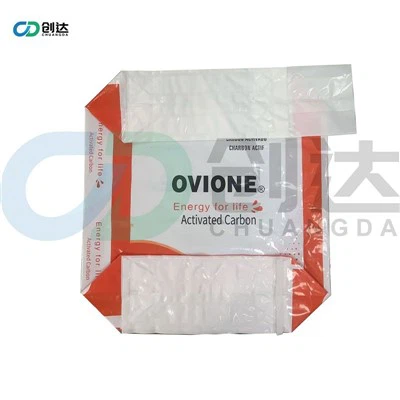
Attention all woven bag manufacturers! Choosing the wrong raw material can lead to production problems and subpar finished products. Today, we'll break down the main raw materials, PP and PE granules, covering their performance, uses, and selection tips. Even beginners can choose the right material!
I. Main Raw Material: PP Granules (Core Material for Woven Bags)
PP is the mainstream raw material for woven bags, offering excellent value and versatility. It's a go-to choice for essential needs. Its core advantages are significant: strong rigidity and firmness, resulting in sturdy, non-collapsing bags that don't easily deform after loading. It can handle 5-20kg of typical loads, perfectly adequate for everyday packaging. Its temperature resistance is also reliable, remaining stable from -10℃ to 100℃, and it's durable even under direct sunlight and at room temperature. Moreover, its excellent processing fluidity ensures smooth and uninterrupted weaving, improving bag-making efficiency. Combined with its low density (0.90-0.91g/cm³), it's lighter than PE bags of the same size, making transportation and use easier.
It's suitable for a wide range of applications. For essential industrial needs like cement bags, feed bags, fertilizer bags, and building material packaging, it's indispensable. For everyday use, such as grain bags, express delivery packaging bags, and woven tote bags, it's cost-effective and durable. For moisture-proof or customized products, laminated woven bags and color-printed brand bags, using PP granules as a base is also suitable.
When selecting a woven bag, focus on the melt flow index (MI). A MI of 1.5-3.0 g/10min offers the best adaptability. Too low an MI leads to breakage during filament drawing, while too high an MI results in insufficient bag strength. Prioritize general-purpose grades; PP T30S offers the best value and is suitable for standard applications. For increased load-bearing capacity, choose PP F401 for superior strength. For thinner woven bags, PP Y1500 offers finer filament drawing and a better finished product.
II. Auxiliary/Modified Raw Materials: PE Granules (Flexible/Special Needs Grades)
PE granules are often used to compensate for the shortcomings of PP, emphasizing toughness and adaptability to special environments. They are divided into HDPE (high-density PE) and LDPE (low-density PE), with HDPE being the primary choice in the woven bag industry. The core highlights are its exceptional toughness, impact and puncture resistance, making it less prone to tearing when holding sharp items (such as hardware accessories) or heavy goods, with a load-bearing capacity exceeding 20kg; outstanding low-temperature resistance, capable of withstanding temperatures from -60℃ to 80℃, ensuring it won't crack even in northern winters; high flexibility, a soft feel, good bag fit, and superior moisture resistance compared to PP, making it suitable for packaging damp items.
It's highly adaptable to specific scenarios. For heavy-duty packaging, it's the perfect choice: ore bags, large cargo bags, and hardware accessory bags, relying on PE's toughness to prevent tearing. For special environmental needs, bags used in low-temperature northern regions, and moisture-proof outer bags for aquatic products/fruits and vegetables, PE can withstand environmental challenges. For a balance of performance, consider PP+PE composite woven bags, which combine the rigidity of PP with the toughness of PE, offering both moisture protection and load-bearing capacity, adapting to complex needs.
When selecting a material, the key factors are MI (Minimum Intake) and type. Prioritize HDPE (balanced rigidity and toughness), with an MI controlled between 0.5-2.0 g/10 min. For general-purpose composite bags, choose HDPE 9001, which is compatible with most composite woven bags. For high toughness, opt for HDPE 6888, which offers strong compression resistance in heavy-duty applications. If using a flexible lamination layer, LDPE 2426H offers better compatibility, providing both excellent adhesion and moisture resistance.
III. Core Differences Between PP vs PE Granules (Quick Matching)
Hardness/Feel: PP is firmer and more rigid, preventing deformation when loaded; PE is softer and more flexible, offering better fit.
Core Advantages: PP excels in rigidity, low cost, and high processing efficiency, offering the best cost-performance ratio for general applications; PE wins in toughness, puncture resistance, low-temperature resistance, moisture resistance, and durability, making it suitable for special needs.
Suitable Needs: For everyday regular load-bearing and requiring sturdy bags, choose PP; for loading heavy/sharp items, use in northern winters, and requiring moisture protection, choose PE or PP+PE composite.
Cost-Performance Ratio: PP offers higher cost-performance and is the primary choice; PE offers moderate cost-performance, focusing on addressing weaknesses, so don't choose blindly.
IV. Tips for Beginners to Avoid Pitfalls
First Determine Load Capacity: For 5-15kg of regular needs, choose PP T30S directly; for over 15kg, upgrade to PP F401 or switch to PP+PE composite material.
Suitable Environments: In northern winters and humid environments, either add a PE film layer or use HDPE directly. Raw materials are carefully selected to prevent bags from becoming brittle or damp. Cost control is maintained: for general-purpose bags, sufficient pure PP material is used without waste; only for special requirements (high toughness, low-temperature resistance) is modified PE used, saving money while meeting standards.