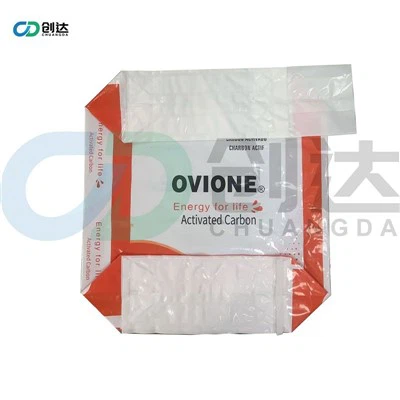
Valve bags, commonly known as bottom-attached bags, are filled through a valve inlet at the top or bottom using specialized filling equipment. After filling, the material automatically forms a cubic shape, resulting in high filling efficiency, neat stacking, sturdiness, reliability, convenient transportation, and an attractive appearance. They are widely used for edible powders, chemical powders, fertilizers, synthetic materials, chemicals, minerals, building materials, and other powdered or granular solid materials and flexible packaging items. They are currently the mainstream and environmentally friendly packaging internationally.
Valve Bag Classification
Paper-Plastic Composite Valve Bags: Made with plastic woven bags (base fabric) as the base material, laminated using a casting method (fabric/film/paper composite, a three-in-one).
Kraft Paper Valve Bags: Made of kraft paper (primarily divided into imported and domestic kraft paper). The number of kraft paper layers varies from one to six depending on the application, and the center can be coated or have a PE plastic film added.
PE Valve Bags: Commonly known as heavy-duty valve bags, made of polyethylene film, with a film thickness generally between 8-20 mils.
Low-melting-point valve bags: Made of low-melting-point polyethylene film, with a film thickness typically between 8-20 mils, suitable for large-scale production in chemical enterprises, reducing pollution and lowering worker workload.
Composite material valve bags: Combining the printability of paper with the moisture resistance and durability of plastic, this is a new type of material.
Features of valve bags:
Reasonable mechanical structure: In drop tests, all parts of the square-bottom valve bag exhibit uniform strength, with even weight distribution and no stress concentration, indicating a reasonable structural design. Tests show that square-bottom valve bags made of different materials are 1-3 times stronger than sewn-bottom bags.
Improved stacking stability: The square shape of the valve bag, resembling a brick, provides significantly better stacking stability than sewn-bottom flat bags, preventing slippage and enabling automatic stacking and pallet loading/unloading.
Maximized storage capacity: The neat stacking of square-bottom valve bags improves storage space utilization and facilitates transportation.
Self-standing: The rectangular bottom of the bag ensures stability during filling and unloading, reducing the risk of spillage.
Easy identification: The label allows for easy identification and serves as both decoration and advertising.
Valve bags have a broad customer base, covering industries such as chemicals (carbon black, titanium dioxide, zirconium silicate, silicon carbide, silicon dioxide, alumina, iron oxide pigments, etc.), building materials (insulation materials, cement, putty powder, gypsum, interface agents, etc.), and agriculture and animal husbandry (rice, starch, feed, fertilizer, etc.).
They are particularly suitable for packaging powdered or granular solid materials and flexible items such as edible powders, chemical powders, fertilizers, synthetic materials, grains, salt, and minerals. They are especially suitable for export companies, enhancing product packaging quality. They significantly improve the filling environment and worker health, while also offering increased packaging efficiency, convenient transportation, high durability, and low breakage rate.