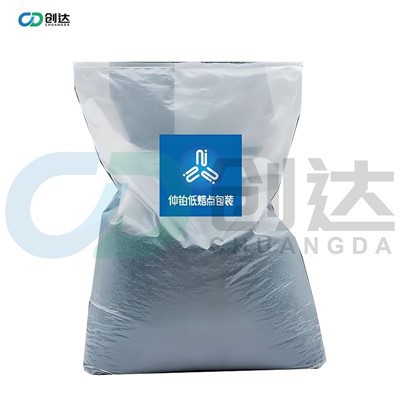


Six Functional Advantages of Heavy Duty Powder Packaging Bags
High-Strength Load-Bearing and Anti-Damage Design
These bags use polypropylene (PP) woven fabric with a weight of 120-200g/m². Their warp and weft tensile strength reaches ≥2000N/50mm. They pass the drop test-25kg bags can fall freely from a height of 1.5m three times without damage. This makes them suitable for heavy materials like cement and chemical powders.
Composite film packaging bags, such as those combining PP woven fabric with a PE inner film, have a puncture resistance of ≥80N. This prevents sharp particles, like metal powders, from piercing the bag.
Extreme Moisture Resistance and Dust Control
They feature a multi-layer barrier structure. The PE inner film has a thickness of ≥80μm and a water vapor transmission rate of ≤10g/(m²・24h). It's paired with a sealing process that achieves a heat-seal strength of ≥15N/15mm. This makes them ideal for moisture-sensitive powders such as milk powder and flour.
For dust leakage prevention, valve bags use a labyrinth-style valve. This design limits dust emission to ≤10mg/m³. When unloading, it can be used with dust collection devices, meeting OSHA occupational safety standards.
Versatility for Complex Scenarios
In the food industry, where hygiene compliance and oxidation prevention are key, packaging solutions use food-grade PE inner films with aluminum foil barriers. These meet standards with a total bacterial count of ≤100CFU/g and an oxygen transmission rate of ≤50cm³/(m²・24h).
For chemical raw materials, which require corrosion resistance and anti-static properties, UV-resistant polypropylene with a conductive carbon black coating is used. These bags have a surface resistance of ≤10⁹Ω and can withstand corrosion from strong acids (pH≤2) and alkalis (pH≥12).
In the building materials sector, where weather resistance and impact resistance matter, UV-resistant woven fabric with anti-aging masterbatches is employed. These bags retain ≥80% of their strength after 6 months of outdoor storage and remain stable in environments ranging from -20℃ to 70℃.
For pharmaceutical powders, which demand sterility and low migration, ethylene oxide sterilized bags produced in clean zones are used. They have particle contamination (≥5μm) of ≤100 particles/ft³, complying with GMP standards.
Efficient Design for Loading, Unloading, and Measurement
They are designed for automation compatibility. Bags weighing 25-50kg are equipped with lifting straps that can bear ≥300kg. 1000kg bulk bags come with four lifting rings with a breaking force of ≥2000kg. This makes them compatible with loading and unloading equipment like forklifts and overhead cranes.
Some packaging bags have built-in transparent windows (5cm×5cm) with scale lines. These allow visual inventory management with an error margin of ≤±2%.
Environmental Protection and Recycling Innovation
Single-material recyclable options, like pure PP woven bags, have a 95% recovery rate. This reduces recycling costs by 30% compared to composite film packaging. Lightweight designs-reducing the weight of 25kg bags from 300g to 250g-also cut down on material consumption.
Reusable bulk bags, made from food-grade HDPE, can be reused over 50 times after high-pressure cleaning. They're suitable for bulk food raw materials like flour and starch.
Compliance and Safety Assurance
Packaging bags for food contact comply with GB 4806.7-2022, with heavy metals (lead, cadmium) content ≤1ppm. Chemical-use bags are printed with warning signs, such as "corrosive" or "flammable," and are accompanied by MSDS reports.
Standard Specification System for Heavy Duty Powder Packaging Bags
Weight and Size Specifications (Common Types)
Valve bags, with a weight range of 25-50kg, have dimensions of 550×900×100mm (flat bottom). They're used for cement, putty powder, and chemical fertilizers.
Sewn-bottom bags, weighing 10-50kg, measure 450×750×80mm (with folded edges). They're suitable for flour, sugar, and feed.
Bulk bags (FIBC), ranging from 500-1000kg, are cubic with dimensions of 900×900×1100mm. They're used for ore powder, plastic granules, and bentonite.
Container bags, holding 1-2 tons, are pillow-shaped at 1200×1000×1400mm. They're ideal for quartz sand, fly ash, and kaolin.
Material and Structure Specifications
Single-layer woven bags are made of 100% PP woven fabric with a weight of 120-150g/m². They're used for dry, non-hygroscopic powders like cement.
Composite bags have three layers: an inner layer of PE film (50-100μm) for moisture and dust resistance; a middle layer of PP woven fabric (150-200g/m²) as the load-bearing main body; and an outer layer of UV-resistant PE film (20-30μm) for outdoor weather resistance, such as in chemical fertilizer packaging.
Anti-static bags contain ≥3% conductive carbon black, with a surface resistance of ≤10⁸Ω. They're used for flammable powders like aluminum powder and coal powder.
Sealing and Functional Component Specifications
Valve types include round valves (50-70mm in diameter) with a discharge speed of 50-100kg/min, suitable for automatic filling lines. Square valves (100×100mm) offer better dust control, making them ideal for pharmaceutical powders.
Breathable designs include micro-porous films (0.1-1μm pore size) with an air permeability of 10-20L/(m²・min), preventing bags from expanding due to pressure changes during powder transport. One-way exhaust valves open when pressure reaches ≥5kPa, suitable for puffed powders like laundry detergent.
Customized Specifications for Special Scenarios
Food-Grade Powder Packaging
The inner layer uses an EVOH barrier with an oxygen transmission rate of ≤10cm³/(m²・24h). This suits easily oxidized materials like milk powder and coffee powder. These bags must pass FDA certification with a migration limit of ≤0.5mg/kg.
Hazardous Powder Packaging
They have explosion-proof certification (such as ATEX Zone 21) and an electrostatic grounding resistance of ≤10Ω. The bags are printed with UN numbers (e.g., UN1479 for ammonium nitrate) and comply with General Technical Conditions for Transport Packaging of Dangerous Goods.
Purchasing and Usage Recommendations
For load-bearing safety, choose packaging with a load capacity ≥1.5 times the actual load. For example, 50kg powders should use bags with a 75kg capacity.
For environmental adaptability, in humid and hot areas, select packaging with moisture resistance ≥5g/(m²・24h) water vapor transmission rate. In cold regions, use low-temperature resistant PE with a brittle temperature of ≤-40℃.
For cost optimization, when annual usage is ≥100,000 bags, custom printing-such as company logos and usage instructions-can reduce individual bag costs by 5%-10%.
Hot Tags: heavy duty powder packaging bags, China heavy duty powder packaging bags manufacturers, factory, ffs bags, FFS Heavy Duty Film Bags, FFS PE Valve Bag, FFS Shaped Bags, Heavy Duty Powder Packaging Bags